Key Takeaways
- AI can dramatically improve network monitoring, but only when customer data remains secure and private.
- Sending sensitive infrastructure data to public AI services may introduce unnecessary security and compliance risks.
- Isolated AI models help ensure that one organization’s data is never exposed to another customer or a public model.
- Organizations in regulated industries need AI solutions that prioritize security, privacy, and compliance from the ground up.
- The future of AI-powered monitoring depends as much on trust as it does on intelligence.
Artificial intelligence is quickly becoming one of the most exciting developments in network monitoring.
Engineers can summarize incidents in seconds.
Complex alerts can be explained in plain language.
Troubleshooting steps can be suggested automatically.
Historical trends become easier to understand.
The possibilities seem almost endless.
But beneath all the excitement lies a question that many organizations are only beginning to ask.
Where is my data actually going?
For IT teams responsible for healthcare systems, financial institutions, government agencies, legal firms, and other organizations that manage sensitive information, that question matters just as much as the AI’s capabilities.
Because the smartest AI in the world isn’t worth much if you can’t trust it with your data.
Not All AI Is Built the Same
Many AI-powered applications rely on large public language models.
Those models are incredibly capable.
But depending on how they’re implemented, they may require customer data to leave the organization’s environment for processing.
For some businesses, that may be an acceptable tradeoff.
For others, it simply isn’t.
Network monitoring platforms collect an extraordinary amount of operational information.
Device names.
IP addresses.
Network topology.
Server details.
Application information.
Performance metrics.
Configuration data.
Alert histories.
Individually, those details may seem harmless.
Together, they create a remarkably detailed blueprint of an organization’s infrastructure.
That’s not information most security teams want leaving their control.
AI Shouldn’t Require You to Sacrifice Privacy
The promise of AI isn’t just faster troubleshooting.
It’s better decision-making.
Organizations shouldn’t have to choose between gaining those benefits and protecting sensitive operational data.
Security and intelligence should work together.
Not compete with each other.
The most effective AI solutions are designed with privacy as a foundational principle, not an afterthought.
A Different Approach to AI
At Lumics, we believe customer data belongs to the customer.
That’s why our AI architecture was designed differently from the beginning.
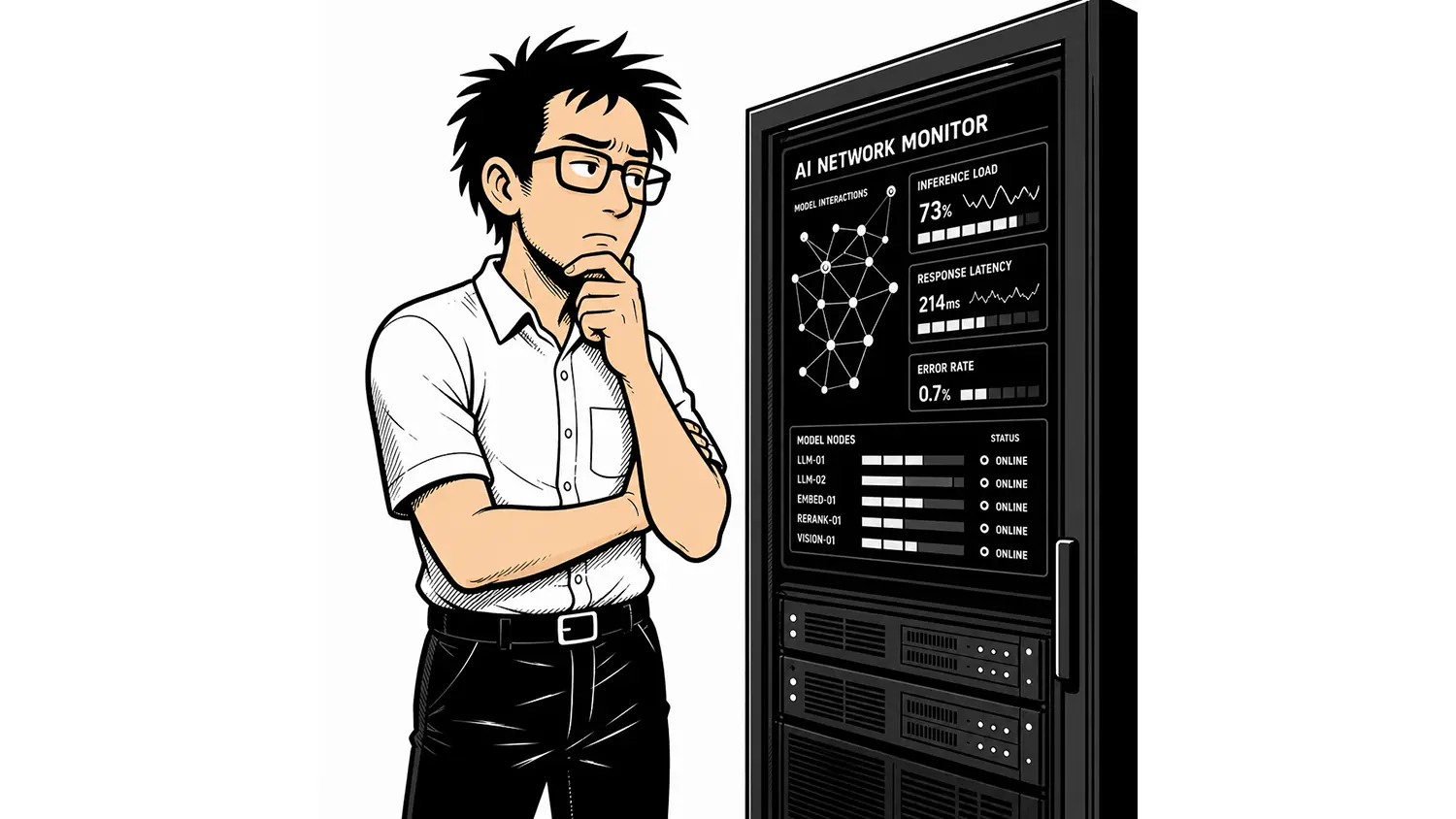
Instead of relying on shared public AI services, every Lumics customer receives their own isolated AI environment powered by dedicated large language models.
Your monitoring data remains logically separated from every other customer.
It isn’t blended into a shared knowledge pool.
It isn’t used to improve someone else’s model.
It remains yours.
That architecture allows organizations to take advantage of AI-assisted monitoring while maintaining strict control over their operational data.
Isolation Matters
Imagine a multi-tenant apartment building.
Everyone has their own locked residence.
The walls separate each tenant.
Their belongings remain private.
Now imagine removing those walls.
That’s effectively what happens when customer data is combined inside a shared AI environment.
Even when strong protections exist, many organizations simply aren’t comfortable taking that risk.
Logical isolation provides an additional layer of confidence that customer information stays exactly where it belongs.